Hi everyone! Today, I will be sharing about my Science ace - "Dancing Raisins"
Materials needed
Raisins
Clear, colorless carbonated drink
Method
1)Pour the clear carbonated drink (sprite, h-two-o etc.) into a tall glass/ or just use the bottle itself
2)Put the raisins into the glass and see what happens
Observation
Raisins “dance” up and down the glass
Explanation
The raisins dance up and down due to density
Density is defined as its mass per unit volume.
When you put the raisins into the glass, you would see them sinking to the bottom of the glass.
As the carbonated drink releases carbon dioxide, the carbon dioxide stick to the rough surface of a raisin.
Raisin is lifted because of the increase in buoyancy.
When the raisin reaches the surface, the bubbles pop, and the carbon dioxide gas escapes into the air.
Raisin loses buoyancy and sink.
This rising and sinking of the raisins continues until most of the carbon dioxide has escaped, and the carbonated drink becomes un-carbonated.
Also, as the experiment goes on, the raisin gets soggy and becomes too heavy to rise to the surface.
Conclusion
Really fun, yet simple experiment that everyone can do :D
Tips
Try not to shake the bottle/can of carbonated drink too much, or it would lose its gas, and it would get really messy when you open it.
When I first tried the experiment, I put in a raisin that was too big and it would not “dance”. I tried another raisin and saw it dance a little, but it stopped after a while. In the end, I used a small raisin and it danced perfectly. The video footage is not very clear, but it could still be seen :D
Wednesday, August 10, 2011

Monday, August 8, 2011
Science Ace (Non-Newtonian Fluid)
Hi there everyone! Today, I will be sharing on my science ACE - Non Newtonian Fluids.
Materials used in experiment- corn-starch and water (ratio 1:1)
Steps to make a Non-Newtonian fluid:
1)Mix corn starch and water together in a pot or container
2)Mix evenly till the corn-starch acts like a liquid when you stir it slowly.
3)When you tap on the liquid with your finger, it shouldn't splash, but rather will become hard.
Personally, I added too much water at first and I had to wait for the corn-starch to settle down, before I could pour away the excess liquid. In the end, my mixture was a little too thick, but it would still be considered a Non-Newtonian fluid because it exhibited the properties of one.
Properties of a Non-Newtonian fluid
•A fluid whose flow properties differ in any way from those of Newtonian fluids.
•For example, when you poke your finger into a Non-Newtonian fluid, there would be a finger hole left there. This does not happen in Newtonian fluid.
•Hard when you hit it
•Acts like a liquid when you gently touch it.
Properties of a Newtonian fluid
•A Newtonian fluid is a fluid whose stress versus strain rate curve is linear and passes through the origin
•Think of this example - You have to pull the trigger on a water pistol to get the water to squirt out. To make the water to come out faster, you have to pull the trigger harder. Fluids resist flow. This phenomenon is known as viscosity. Therefore these fluids are called Newtonian fluids.
•Viscosity depends on temperature, pressure etc.
So, why does corn-starch mixture happen like this?
An example - Think of a busy sidewalk. The easiest way to get through a crowd of people is to move slowly and find a path between people. If you just took a running start and headed straight for the crowd of people, you would quickly slam into someone and you wouldn't get very far. This is similar to what happens in the corn-starch mixture. The corn-starch mixture acts like a crowd of people. Pressing your finger slowly into the mixture allows the corn-starch to move out of the way, but tapping the mixture quickly doesn't allow the solid corn-starch particles to slide past each other and out of the way of your finger.
The Newtonian fluid theory developed by Isaac Newton tells us that a fluid when applied pressure on, would not have any effect on the viscosity of it. However, corn-starch mixture and a lot of other fluids also act like this. Therefore, they are known as Non-Newtonian fluid.
This therefore explains what is seen in the video, when I hit the mixture, roll the mixture and try to take a lump of it out.
Other examples of Non-Newtonian fluids
Silly Putty
Ketchup
Chilled Caramel Toppings
Materials used in experiment- corn-starch and water (ratio 1:1)
Steps to make a Non-Newtonian fluid:
1)Mix corn starch and water together in a pot or container
2)Mix evenly till the corn-starch acts like a liquid when you stir it slowly.
3)When you tap on the liquid with your finger, it shouldn't splash, but rather will become hard.
Personally, I added too much water at first and I had to wait for the corn-starch to settle down, before I could pour away the excess liquid. In the end, my mixture was a little too thick, but it would still be considered a Non-Newtonian fluid because it exhibited the properties of one.
Properties of a Non-Newtonian fluid
•A fluid whose flow properties differ in any way from those of Newtonian fluids.
•For example, when you poke your finger into a Non-Newtonian fluid, there would be a finger hole left there. This does not happen in Newtonian fluid.
•Hard when you hit it
•Acts like a liquid when you gently touch it.
Properties of a Newtonian fluid
•A Newtonian fluid is a fluid whose stress versus strain rate curve is linear and passes through the origin
•Think of this example - You have to pull the trigger on a water pistol to get the water to squirt out. To make the water to come out faster, you have to pull the trigger harder. Fluids resist flow. This phenomenon is known as viscosity. Therefore these fluids are called Newtonian fluids.
•Viscosity depends on temperature, pressure etc.
So, why does corn-starch mixture happen like this?
An example - Think of a busy sidewalk. The easiest way to get through a crowd of people is to move slowly and find a path between people. If you just took a running start and headed straight for the crowd of people, you would quickly slam into someone and you wouldn't get very far. This is similar to what happens in the corn-starch mixture. The corn-starch mixture acts like a crowd of people. Pressing your finger slowly into the mixture allows the corn-starch to move out of the way, but tapping the mixture quickly doesn't allow the solid corn-starch particles to slide past each other and out of the way of your finger.
The Newtonian fluid theory developed by Isaac Newton tells us that a fluid when applied pressure on, would not have any effect on the viscosity of it. However, corn-starch mixture and a lot of other fluids also act like this. Therefore, they are known as Non-Newtonian fluid.
This therefore explains what is seen in the video, when I hit the mixture, roll the mixture and try to take a lump of it out.
Other examples of Non-Newtonian fluids
Silly Putty
Ketchup
Chilled Caramel Toppings
Homo floresiensis
Hi everyone! Today, I will be talking about the Homo floresiensis.

On the left is the skull of the Homo Floresiensis. On the right is the skull of the modern human.
The Homo floresiensis is a possible species of the genus "Homo". It was discovered in 2003 on the Indonesian Island of Flores. It was discovered in the "Liang Bua Cave". There were also 7 additional skeletons found in the cave and besides the skeletons, there were also stone tools recovered from the area.
What is so special about the Homo floresiensis is that is could be a possible species of the genus "homus" that was still surviving a short 12,000 years ago, making it the longest surviving non-modern human species besides the Neanderthals.
The anatomy of the skeleton extracted from the site is easily identifiable through its small body and small brain size. The specie was estimated to be at most 1.06m tall and it's range was far shorter than normal humans.
The findings could have numerous effects on modern understandings of the genus "Homus", though not very profound effects. However, it could tell us that the human species is more vulnerable than ever to the evolutionary forces than we think it could.
The Homo floresiensis was alive until 12,000 years ago and it is a very short time as compared to the whole life-span of the planet. Just imagine, 12,000 years from now and there is a whole new completely different species of humans! Humans are already probably starting to evolve now!
The only way we would know is to wait....
Here is the URL of the News article http://www.sciencenews.org/view/generic/id/333112/description/Taking_the_measure_of_a_hobbit

On the left is the skull of the Homo Floresiensis. On the right is the skull of the modern human.
The Homo floresiensis is a possible species of the genus "Homo". It was discovered in 2003 on the Indonesian Island of Flores. It was discovered in the "Liang Bua Cave". There were also 7 additional skeletons found in the cave and besides the skeletons, there were also stone tools recovered from the area.
What is so special about the Homo floresiensis is that is could be a possible species of the genus "homus" that was still surviving a short 12,000 years ago, making it the longest surviving non-modern human species besides the Neanderthals.
The anatomy of the skeleton extracted from the site is easily identifiable through its small body and small brain size. The specie was estimated to be at most 1.06m tall and it's range was far shorter than normal humans.
The findings could have numerous effects on modern understandings of the genus "Homus", though not very profound effects. However, it could tell us that the human species is more vulnerable than ever to the evolutionary forces than we think it could.
The Homo floresiensis was alive until 12,000 years ago and it is a very short time as compared to the whole life-span of the planet. Just imagine, 12,000 years from now and there is a whole new completely different species of humans! Humans are already probably starting to evolve now!
The only way we would know is to wait....
Here is the URL of the News article http://www.sciencenews.org/view/generic/id/333112/description/Taking_the_measure_of_a_hobbit
Tuesday, July 26, 2011
Science Eureka !
Hi everyone! Today, I will be talking about the Science sabbatical that I attended 2 terms ago - Science Eureka.

* The word - Eureka was supposedly shouted by Archimedes when he stepped into a bathtub and the water level rose, thus discovering that volumes of irregular objects could be measured with precision.
The sabbatical aimed to teach students more about Science. The whole course was split into 3 modules - Chemistry, Physics and Biology.
On the first day, we had the Biology module. Our trainers were 2 secondary 4 students . We conducted many interesting experiments such as cooking a piece of liver and testing it. Also, the trainers were very friendly and provided help to us whenever we called for them.
On the second day and third day, we had the chemistry module. The chemistry module took 2 days because we had a lot more experiments. My personal favourite was using a type of chemical that could adsorb water to make "ice kacang". The chemical absorbed the water and turned into a slushy mix. We then added colouring to make it look even more real!
On the fourth day, we had physics. Physics was my personal favourite module. We tried many experiments. The most interesting one was using an orb charged with 1000 volts of electricity and causing a person's hair to stand. It was an interesting sight seeing other people "turning" into Albert Einstein.
On the last day, we had to do a presentation on artificial enzymes. My group, consisting of Ethan, Aloysius and Javier, split up the work and worked efficiently to get the research done. Unfortunately, we could not find the right information and we got into a rather big mess. Fortunately, the trainers were rather kind and forgave us for the bad research.
In conclusion, the sabbatical was rather interesting completed with kind trainers. Also, the experiments and lesson packages were interesting and the sabbatical was the right amount of time. I hope to be able to participate in this sabbatical some day again.
* The word - Eureka was supposedly shouted by Archimedes when he stepped into a bathtub and the water level rose, thus discovering that volumes of irregular objects could be measured with precision.
The sabbatical aimed to teach students more about Science. The whole course was split into 3 modules - Chemistry, Physics and Biology.
On the first day, we had the Biology module. Our trainers were 2 secondary 4 students . We conducted many interesting experiments such as cooking a piece of liver and testing it. Also, the trainers were very friendly and provided help to us whenever we called for them.
On the second day and third day, we had the chemistry module. The chemistry module took 2 days because we had a lot more experiments. My personal favourite was using a type of chemical that could adsorb water to make "ice kacang". The chemical absorbed the water and turned into a slushy mix. We then added colouring to make it look even more real!
On the fourth day, we had physics. Physics was my personal favourite module. We tried many experiments. The most interesting one was using an orb charged with 1000 volts of electricity and causing a person's hair to stand. It was an interesting sight seeing other people "turning" into Albert Einstein.
On the last day, we had to do a presentation on artificial enzymes. My group, consisting of Ethan, Aloysius and Javier, split up the work and worked efficiently to get the research done. Unfortunately, we could not find the right information and we got into a rather big mess. Fortunately, the trainers were rather kind and forgave us for the bad research.
In conclusion, the sabbatical was rather interesting completed with kind trainers. Also, the experiments and lesson packages were interesting and the sabbatical was the right amount of time. I hope to be able to participate in this sabbatical some day again.
Tossing, Turning and Forgetting
In a news article on www.sciencenews.org, researchers found that continuous bouts of sleep was critical for a person to have a good memory. If a person were to have interrupted periods of sleep, he was more unlikely to forget things more easily.
This news article is rather significant because it can help a person know more about why he is forgetting things more often.
An example would be my grandmother. She told me that she was forgetting things more recently in this days. Then, she told me that she had not been sleeping properly in the past few days. After I read this article, I understood what had happened and I was able to understand why her memory was not as good.
This news article will help students a lot because they will know that instead of studying the whole night, they will instead spend the time sleeping and hoping to get a good night's, so that they can remember what they memorize.
Original Link-http://www.sciencenews.org/view/generic/id/332712/title/Tossing%2C_turning%2C_forgetting
This news article is rather significant because it can help a person know more about why he is forgetting things more often.
An example would be my grandmother. She told me that she was forgetting things more recently in this days. Then, she told me that she had not been sleeping properly in the past few days. After I read this article, I understood what had happened and I was able to understand why her memory was not as good.
This news article will help students a lot because they will know that instead of studying the whole night, they will instead spend the time sleeping and hoping to get a good night's, so that they can remember what they memorize.
Original Link-http://www.sciencenews.org/view/generic/id/332712/title/Tossing%2C_turning%2C_forgetting
Monday, July 11, 2011
Reflections for Science Lessons after 1 1/2 years in Hwa Chong
1 and a half years of Science lessons has passed and I have learnt much, and gained brilliant insights about Science.
Before learning about Science in Hwa Chong Institution, I had always thought that Science was a very "slack" subject, and that it did not require much practice or learning. Also, I thought that it was a rather boring subject. Neither did my so-so results in Science pursuade me to do better. As a result, I went on from a Science lesson to another, not bothering to do anything.
During my PSLE, I did considerably well, getting an A. However, I did not really care much getting into Hwa Chong.
Once I got into Hwa CHong, and I went through my first ever Science Lesson and my SCience education totally changed. Before in primary school, I rarely had the chance to go to the Science labs to do experiments. Now, in Hwa Chong, I have the chance to go to the world-class Science labs to do experiments.
With that, my knowledge of Science has changed forever and ever, and I have finally come to appreciate the beauty of Science and its difference from other subjects.
Just a short reflection of my life in Hwa Chong that I wanted to share with everyone
=D
Before learning about Science in Hwa Chong Institution, I had always thought that Science was a very "slack" subject, and that it did not require much practice or learning. Also, I thought that it was a rather boring subject. Neither did my so-so results in Science pursuade me to do better. As a result, I went on from a Science lesson to another, not bothering to do anything.
During my PSLE, I did considerably well, getting an A. However, I did not really care much getting into Hwa Chong.
Once I got into Hwa CHong, and I went through my first ever Science Lesson and my SCience education totally changed. Before in primary school, I rarely had the chance to go to the Science labs to do experiments. Now, in Hwa Chong, I have the chance to go to the world-class Science labs to do experiments.
With that, my knowledge of Science has changed forever and ever, and I have finally come to appreciate the beauty of Science and its difference from other subjects.
Just a short reflection of my life in Hwa Chong that I wanted to share with everyone
=D
Tuesday, July 5, 2011
Interesting News - Rare Earths
Rare earth elements plentiful in ocean sediments
Here is the link - http://www.sciencenews.org/view/generic/id/332099/title/Rare_earth_elements_plentiful_in_ocean_sediments
Hi everyone, today I will be commenting on an article about Rare Earths being found in the ocean floor.
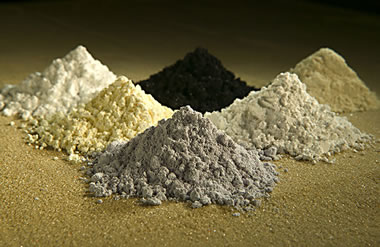
So, basically what is a rare earth? Essentially, it is a group of 17 chemical elements found in the periodic table. Contrary to their name, rare earths are no that rare. Ironically, they are rather abundant, with cerium (one of the rare earths) having the same volume as copper.

However, rare earths are not found concentrated together and in economically-exploitable forms. As a result, they are given the name - Rare Earths.
Now, enough of the description and on to the present crisis surrounding rare earths. We might remember the epic saga caused by China last year when it decided to clamp down on rare-earths exports, possibly to conserve the rare earths and also to be enviromentally-friendly.
As a result of this, other countries began to look worldwide for other sources of rare earths. This includes countries such as America, India and Vietnam. However, the mines in these places were shut down when China became extremely competitive in the 1990s and slashed rare earth prices, causing the rest of the companies to close down.
As a result, reopening the mines now would cost time and money, and would most probably take a few years to reopen.
The news of rare earths being found in the seabed gives nations, such as Japan, a chance to mine their own rare earths and not rely on any country to import it's rare earths from.
This would in turn make the economy better and would also create new jobs for people. The ocean, being a relatively un-explored area of the Earth, if opened up through new technology, would allow humans to make entirely new careers out there.
But there is for the future, and when new tachnology comes we do not know. Until then, the world has to rely on a single country to mine rare earths for them.
Here is the link - http://www.sciencenews.org/view/generic/id/332099/title/Rare_earth_elements_plentiful_in_ocean_sediments
Hi everyone, today I will be commenting on an article about Rare Earths being found in the ocean floor.
So, basically what is a rare earth? Essentially, it is a group of 17 chemical elements found in the periodic table. Contrary to their name, rare earths are no that rare. Ironically, they are rather abundant, with cerium (one of the rare earths) having the same volume as copper.
However, rare earths are not found concentrated together and in economically-exploitable forms. As a result, they are given the name - Rare Earths.
Now, enough of the description and on to the present crisis surrounding rare earths. We might remember the epic saga caused by China last year when it decided to clamp down on rare-earths exports, possibly to conserve the rare earths and also to be enviromentally-friendly.
As a result of this, other countries began to look worldwide for other sources of rare earths. This includes countries such as America, India and Vietnam. However, the mines in these places were shut down when China became extremely competitive in the 1990s and slashed rare earth prices, causing the rest of the companies to close down.
As a result, reopening the mines now would cost time and money, and would most probably take a few years to reopen.
The news of rare earths being found in the seabed gives nations, such as Japan, a chance to mine their own rare earths and not rely on any country to import it's rare earths from.
This would in turn make the economy better and would also create new jobs for people. The ocean, being a relatively un-explored area of the Earth, if opened up through new technology, would allow humans to make entirely new careers out there.
But there is for the future, and when new tachnology comes we do not know. Until then, the world has to rely on a single country to mine rare earths for them.
Subscribe to:
Posts (Atom)