1 and a half years of Science lessons has passed and I have learnt much, and gained brilliant insights about Science.
Before learning about Science in Hwa Chong Institution, I had always thought that Science was a very "slack" subject, and that it did not require much practice or learning. Also, I thought that it was a rather boring subject. Neither did my so-so results in Science pursuade me to do better. As a result, I went on from a Science lesson to another, not bothering to do anything.
During my PSLE, I did considerably well, getting an A. However, I did not really care much getting into Hwa Chong.
Once I got into Hwa CHong, and I went through my first ever Science Lesson and my SCience education totally changed. Before in primary school, I rarely had the chance to go to the Science labs to do experiments. Now, in Hwa Chong, I have the chance to go to the world-class Science labs to do experiments.
With that, my knowledge of Science has changed forever and ever, and I have finally come to appreciate the beauty of Science and its difference from other subjects.
Just a short reflection of my life in Hwa Chong that I wanted to share with everyone
=D
Monday, July 11, 2011

Tuesday, July 5, 2011
Interesting News - Rare Earths
Rare earth elements plentiful in ocean sediments
Here is the link - http://www.sciencenews.org/view/generic/id/332099/title/Rare_earth_elements_plentiful_in_ocean_sediments
Hi everyone, today I will be commenting on an article about Rare Earths being found in the ocean floor.
So, basically what is a rare earth? Essentially, it is a group of 17 chemical elements found in the periodic table. Contrary to their name, rare earths are no that rare. Ironically, they are rather abundant, with cerium (one of the rare earths) having the same volume as copper.

However, rare earths are not found concentrated together and in economically-exploitable forms. As a result, they are given the name - Rare Earths.
Now, enough of the description and on to the present crisis surrounding rare earths. We might remember the epic saga caused by China last year when it decided to clamp down on rare-earths exports, possibly to conserve the rare earths and also to be enviromentally-friendly.
As a result of this, other countries began to look worldwide for other sources of rare earths. This includes countries such as America, India and Vietnam. However, the mines in these places were shut down when China became extremely competitive in the 1990s and slashed rare earth prices, causing the rest of the companies to close down.
As a result, reopening the mines now would cost time and money, and would most probably take a few years to reopen.
The news of rare earths being found in the seabed gives nations, such as Japan, a chance to mine their own rare earths and not rely on any country to import it's rare earths from.
This would in turn make the economy better and would also create new jobs for people. The ocean, being a relatively un-explored area of the Earth, if opened up through new technology, would allow humans to make entirely new careers out there.
But there is for the future, and when new tachnology comes we do not know. Until then, the world has to rely on a single country to mine rare earths for them.
Here is the link - http://www.sciencenews.org/view/generic/id/332099/title/Rare_earth_elements_plentiful_in_ocean_sediments
Hi everyone, today I will be commenting on an article about Rare Earths being found in the ocean floor.
So, basically what is a rare earth? Essentially, it is a group of 17 chemical elements found in the periodic table. Contrary to their name, rare earths are no that rare. Ironically, they are rather abundant, with cerium (one of the rare earths) having the same volume as copper.
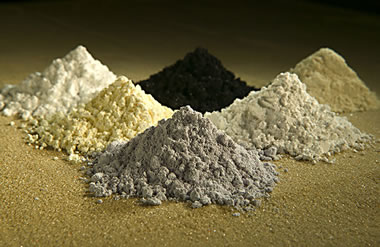
However, rare earths are not found concentrated together and in economically-exploitable forms. As a result, they are given the name - Rare Earths.
Now, enough of the description and on to the present crisis surrounding rare earths. We might remember the epic saga caused by China last year when it decided to clamp down on rare-earths exports, possibly to conserve the rare earths and also to be enviromentally-friendly.
As a result of this, other countries began to look worldwide for other sources of rare earths. This includes countries such as America, India and Vietnam. However, the mines in these places were shut down when China became extremely competitive in the 1990s and slashed rare earth prices, causing the rest of the companies to close down.
As a result, reopening the mines now would cost time and money, and would most probably take a few years to reopen.
The news of rare earths being found in the seabed gives nations, such as Japan, a chance to mine their own rare earths and not rely on any country to import it's rare earths from.
This would in turn make the economy better and would also create new jobs for people. The ocean, being a relatively un-explored area of the Earth, if opened up through new technology, would allow humans to make entirely new careers out there.
But there is for the future, and when new tachnology comes we do not know. Until then, the world has to rely on a single country to mine rare earths for them.
Tuesday, June 28, 2011
Learning Trail @ MacRitchie!!
Hi everyone, today I will be sharing about the sabbatical that I attended last term - "Learning Trail @ MacrRitchie"
In this sabbatical, students were showed around MacRitchie and were taught to appreciate the beauty of the reservoir. The main aim of this sabbatical was to teach students to become trainers themselves, and to be able to teach other people to appreciate the beauty of MacRitchie reservoir. This was under the Active Beautiful and Clean Waters Programme.
All in all, there were about 7 stations in the trail and the most interesting ones are the 2nd and last one. Also interesting was the hike up Bukit Timah Hill.

- A picture showing the journey up the hill
On the way up, we had to pass a small river. The river was crystal clear and it was probably one of the clearest bodies of water that I had ever seen in Singapore before, that is besides a swimming pool of course.

- Spot the Pond Skaters!
We learnt much about water diversity, about Pond Skaters, water pollution etc., from this small segment of the trip from our trainer.
Also, when we climbed up the hill to the tree-top walk, we had a magnificent view of Bukit Timah Hill. The mountain was was beautiful, with plenty of green and also a few species of animals. Those included monkeys, chameleons, colour-changing lizards, insects etc.

- Spectacular view of Bukit Timah Hill
So, what I have been describing just now was about the hike up Bukit Timah Hill. Now, I will be describing about the 7 stations, specifically the ones that I like most.
During the 2nd station, we took water samples from the reservoir and examined them. It was quite interesting and interactive. Too bad I did not take any pictures then D=
Equally interesting, however, was this sign.

It thought us about the importance of not feeding wild animals as it could harm them, as well as ourselves. This is because the animals might become dependent on humans to feed them, and cause them to lose the ability to find food and feed themselves.
One interesting thing that I have learnt from this sabbatical is about why PUB promotes kayaking at reservoirs. Most people might think that kayaking is only detrimental to the environment. However, most people have failed to look at it from a different direction. When a person goes kayaking for a long time, he will learn to treasure the waters around him. This in turn causes the kayaker to love nature even more and he/she will strive to save it. Thus, in this case, kayaking is good for the environment.
At the end of the day, I learnt that nature is something very precious to humans, and that we should all cherish it.
In this sabbatical, students were showed around MacRitchie and were taught to appreciate the beauty of the reservoir. The main aim of this sabbatical was to teach students to become trainers themselves, and to be able to teach other people to appreciate the beauty of MacRitchie reservoir. This was under the Active Beautiful and Clean Waters Programme.
All in all, there were about 7 stations in the trail and the most interesting ones are the 2nd and last one. Also interesting was the hike up Bukit Timah Hill.

- A picture showing the journey up the hill
On the way up, we had to pass a small river. The river was crystal clear and it was probably one of the clearest bodies of water that I had ever seen in Singapore before, that is besides a swimming pool of course.

- Spot the Pond Skaters!
We learnt much about water diversity, about Pond Skaters, water pollution etc., from this small segment of the trip from our trainer.
Also, when we climbed up the hill to the tree-top walk, we had a magnificent view of Bukit Timah Hill. The mountain was was beautiful, with plenty of green and also a few species of animals. Those included monkeys, chameleons, colour-changing lizards, insects etc.

- Spectacular view of Bukit Timah Hill
So, what I have been describing just now was about the hike up Bukit Timah Hill. Now, I will be describing about the 7 stations, specifically the ones that I like most.
During the 2nd station, we took water samples from the reservoir and examined them. It was quite interesting and interactive. Too bad I did not take any pictures then D=
Equally interesting, however, was this sign.

It thought us about the importance of not feeding wild animals as it could harm them, as well as ourselves. This is because the animals might become dependent on humans to feed them, and cause them to lose the ability to find food and feed themselves.
One interesting thing that I have learnt from this sabbatical is about why PUB promotes kayaking at reservoirs. Most people might think that kayaking is only detrimental to the environment. However, most people have failed to look at it from a different direction. When a person goes kayaking for a long time, he will learn to treasure the waters around him. This in turn causes the kayaker to love nature even more and he/she will strive to save it. Thus, in this case, kayaking is good for the environment.
At the end of the day, I learnt that nature is something very precious to humans, and that we should all cherish it.
Subscribe to:
Posts (Atom)